




Operating Principle of Solar-Powered Street Lighting Systems
Solar street lights are an increasingly popular solution for outdoor lighting, especially in areas aiming to reduce energy consumption and environmental impact. Their working principle is based on converting sunlight into electrical energy, storing it, and then using that stored energy to power lighting systems at night. Unlike traditional street lights that rely on grid electricity, solar street lights operate independently, making them both energy-efficient and cost-effective over the long term.
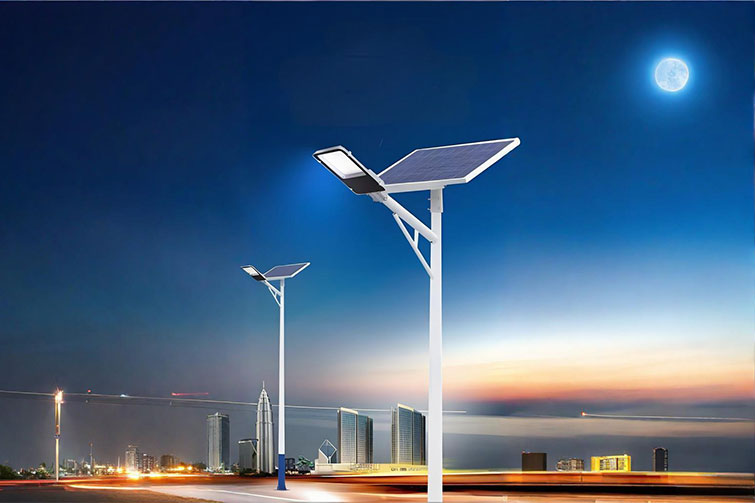
At the core of a solar street light system is the photovoltaic (PV) panel. This panel is responsible for capturing sunlight during the day and converting it into direct current (DC) electricity through the photovoltaic effect. When sunlight strikes the surface of the solar cells, it excites electrons, generating an electric current. The efficiency of this process depends on factors such as sunlight intensity, panel quality, and orientation toward the sun.
The electricity generated by the PV panel is not used immediately. Instead, it is directed to a battery through a charge controller. The battery plays a crucial role in storing energy so that the light can function even when there is no sunlight, such as during nighttime or cloudy weather. Modern solar street lights commonly use lithium-ion or lithium iron phosphate batteries due to their high efficiency, long lifespan, and better performance under varying temperatures.
The charge controller acts as the “brain” of the system. It regulates the flow of electricity between the solar panel, battery, and LED light. During the day, it ensures that the battery is charged efficiently without overcharging, which could damage the battery. At night, it controls the discharge of electricity from the battery to the light, preventing over-discharge and extending battery life. Many advanced controllers also include features like automatic on/off switching based on ambient light levels.
Lighting in solar street lights is typically provided by LED (light-emitting diode) lamps. LEDs are chosen because they consume less power, produce brighter light, and have a longer lifespan compared to traditional lighting technologies such as incandescent or fluorescent bulbs. When the sun sets, a light sensor within the system detects the drop in ambient light and signals the controller to turn on the LED lamp. The stored energy in the battery is then used to power the light throughout the night.
Some modern solar street lights are equipped with intelligent features such as motion sensors and dimming functions. Motion sensors detect movement nearby and increase the brightness of the light when activity is present, then reduce it when the area is empty. This not only enhances security but also conserves energy, allowing the system to operate for longer periods without needing additional power.
Another important aspect of the working principle is system integration. All components—solar panel, battery, controller, and LED light—are designed to work together seamlessly. In many designs, these components are integrated into a single unit, making installation easier and reducing maintenance requirements. The absence of underground wiring also minimizes installation costs and eliminates the risk of electrical hazards.
Environmental conditions play a significant role in the performance of solar street lights. Adequate sunlight exposure is essential for efficient operation. Therefore, proper placement is critical; the panels should be installed in areas free from shading by buildings, trees, or other obstructions. Additionally, regular cleaning of the panels helps maintain their efficiency by ensuring maximum sunlight absorption.
In summary, the working principle of solar street lights revolves around harnessing solar energy, storing it efficiently, and using it intelligently to provide illumination. Through the integration of photovoltaic technology, energy storage systems, and advanced control mechanisms, solar street lights offer a sustainable and reliable alternative to conventional lighting. As technology continues to evolve, these systems are becoming even more efficient, making them an essential component of smart and eco-friendly urban infrastructure.
Tags: